


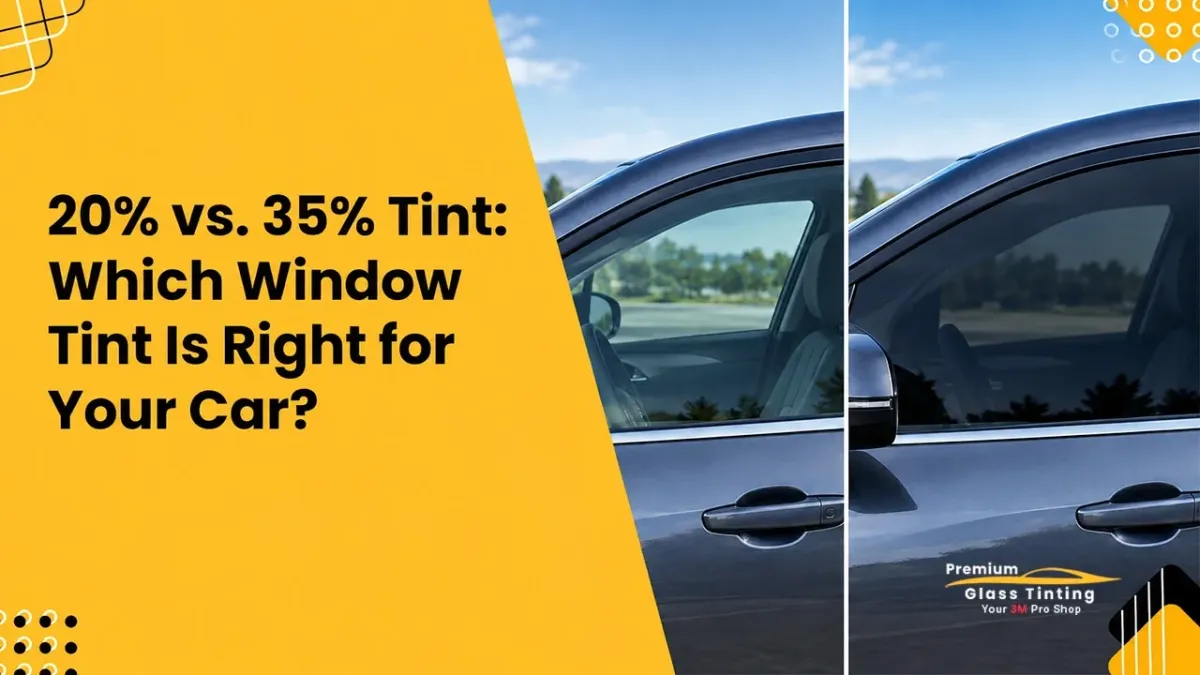
20% vs. 35% Tint: Which Window Tint Is Right for Your Car?
Choosing a window tint percentage can be confusing, especially when you're comparing 20% and 35% window tint. Both can change the appearance of your vehicle, reduce glare, and make driving more comfortable, but they provide noticeably different levels of darkness and visibility.
If you're considering Window Tinting in Rancho Cordova, the right choice depends on how you use your vehicle, how often you drive at night, how much privacy you want, and whether your main goal is appearance, comfort, or protection from the sun.
The good news is that you don't have to choose based on appearance alone. Understanding what the tint percentage actually means can make the decision much easier.
What Does 20% or 35% Window Tint Mean?
The percentage refers to Visible Light Transmission (VLT), which is the amount of visible light that can pass through the window film and glass.
In simple terms:
20% tint: Allows approximately 20% of visible light through, so it appears darker.
35% tint: Allows approximately 35% of visible light through, so it appears lighter.
Lower VLT percentage: Darker appearance.
Higher VLT percentage: More light and generally better outward visibility.
If you're new to tint percentages, our guide Understanding Car Tint Percentages: What Does 20% or 35% Really Mean? provides a more detailed explanation of VLT and how different tint levels affect a vehicle.
It's also important to remember that the final appearance isn't determined by the film alone. Your vehicle's factory glass already has its own VLT, so the final result can look different from the film percentage printed on the product.
20% vs. 35% Tint at a Glance
These differences don't mean one percentage is automatically better than the other. The best option depends on what you want from your automotive window film.
What Is 20% Window Tint Like on a Car?
A 20% window tint gives your vehicle a noticeably darker appearance. Because only about one-fifth of visible light passes through the film, it can create a more private and shaded cabin.
For drivers who spend a lot of time in bright sunlight, the darker appearance can also help make the cabin feel more comfortable.
Potential benefits of 20% tint include:
A darker, more private appearance
Reduced brightness entering the vehicle
Less visible interior from outside
Strong glare reduction
A more customized appearance
Added protection from sunlight when paired with a quality automotive film
However, darker isn't automatically better for every driver.
At night, especially on roads with limited street lighting, a 20% film can make it harder to see outside compared with a lighter tint. Your comfort level with nighttime visibility should therefore be part of the decision.
What Is 35% Window Tint Like on a Car?
A 35% window tint allows more visible light through than a 20% film. The result is a lighter appearance with a good balance between shading and visibility.
For someone who drives the vehicle every day, 35% can be appealing because it doesn't create as dramatic a change in visibility as a darker film.
Common reasons drivers consider 35% tint include:
Balanced appearance
Better visibility than darker tint levels
Reduced glare
Less intense sunlight inside the vehicle
Moderate privacy
Comfortable everyday driving
If you regularly switch between daytime and nighttime driving, visibility may be one of the biggest factors to consider.
20% vs. 35% Tint for Daytime Driving
During the day, both tint levels can make a noticeable difference compared with completely untinted glass.
A 20% film will generally create a darker environment inside the vehicle. This can be useful if bright sunlight bothers your eyes or if you prefer a more private cabin.
A 35% film lets more light through, so the interior remains brighter while still receiving the benefits of window film.
For Rancho Cordova drivers dealing with strong California sunlight, the quality and technology of the film can matter just as much as the darkness level.
For example, Premium Glass & Tint offers 3M automotive window film, including ceramic technology designed for solar and infrared heat rejection without relying solely on a very dark appearance.
What About Nighttime Visibility?
Nighttime visibility is one of the most important differences to consider when comparing 20% and 35% tint.
With 20% tint, less visible light enters the vehicle. On a well-lit road, this may not be a major concern. On darker roads, however, the difference can become more noticeable.
A 35% tint allows more light through, which can make it easier to see surroundings after sunset.
Ask yourself:
Do I drive frequently after dark?
Do I regularly use rural or poorly lit roads?
Do I have difficulty seeing through tinted glass at night?
Is privacy more important to me than maximum visibility?
If nighttime driving is a regular part of your routine, discuss your needs with a professional installer before choosing your film.
Does 20% Tint Keep a Car Cooler Than 35% Tint?
Tint percentage alone does not tell you how much heat a window film can reject.
This is an important point that is sometimes overlooked.
A high-quality ceramic window film can provide substantial heat and infrared rejection without requiring an extremely dark appearance. Premium Glass & Tint's 3M Ceramic IR options, for example, are designed to reject solar energy and infrared radiation while maintaining visibility.
So, if your primary goal is heat reduction, don't simply choose the darkest tint available.
Instead, ask about:
Total solar energy rejection
Infrared rejection
UV protection
Visible light transmission
Film construction
Warranty
Manufacturer specifications
This approach can help you get a cooler, more comfortable vehicle without sacrificing more visibility than necessary.
Which Tint Is Better for Privacy?
If privacy is your primary concern, 20% tint provides a darker appearance than 35%.
The darker film makes it more difficult for people outside the vehicle to see the interior, particularly during daylight.
However, privacy also depends on lighting conditions. A dark film doesn't make the vehicle completely invisible from the outside, especially when the interior is brightly illuminated at night.
For drivers who want privacy while still maintaining a lighter appearance, 35% may provide a more moderate approach.
20% vs. 35% Tint for Glare Reduction
Both options can reduce the amount of intense visible light entering your vehicle.
This can be helpful when dealing with:
Bright afternoon sunlight
Reflections from surrounding vehicles
Glare from buildings and pavement
Low-angle sunlight
Bright outdoor environments
Premium Glass & Tint's existing information on window film notes that tint can help reduce excessive glare, while ceramic films can provide glare and heat benefits without requiring an extremely dark appearance.
If glare is your main concern, consider the film's performance characteristics instead of judging the product only by how dark it looks.
Is 20% or 35% Tint Better for California Drivers?
California has specific requirements governing window tint and materials that can affect what can legally be installed on different vehicle windows. California DMV materials identify Vehicle Code sections addressing materials that obstruct or reduce a driver's view and sun-screening devices.
Because regulations and individual vehicle circumstances can vary, don't assume that a particular percentage is legal simply because it is commonly used.
Before installation, ask your professional tint installer which film and VLT combination is appropriate for each window of your vehicle.
A professional installation can also help you avoid choosing a film based solely on a number without considering the existing glass.
What About Ceramic Window Tint?
If you're primarily interested in comfort and heat rejection, consider looking beyond the percentage.
Ceramic window tint uses advanced film technology designed to reject solar and infrared energy while maintaining useful visibility. Premium Glass & Tint offers 3M Ceramic IR automotive film in Rancho Cordova, with manufacturer-listed performance for solar and infrared rejection and UV protection.
This can be particularly useful for drivers who want:
A cooler cabin
UV protection
Reduced glare
Better comfort in direct sunlight
Less dependence on very dark film
A premium automotive window film
In other words, you don't necessarily need extremely dark windows to improve driving comfort.
How to Choose Between 20% and 35% Tint
Before making your decision, consider these five factors.
1. Your Driving Schedule
If you drive primarily during the day, a darker tint may be more comfortable for you.
If you frequently drive at night, consider how much visibility you want to retain.
2. Your Privacy Preferences
If keeping the vehicle's interior less visible is important, 20% provides a darker appearance than 35%.
3. Your Vehicle's Existing Glass
Factory-tinted glass can affect the final VLT and appearance. The film percentage should not be considered in isolation.
4. Your Main Reason for Tinting
Are you primarily looking for:
Heat rejection?
UV protection?
Privacy?
Glare reduction?
Appearance?
A combination of these?
Your answer may influence the type of film you need more than the percentage itself.
5. Film Quality
Two films with the same VLT percentage can have very different performance characteristics.
A professional installer can explain the difference between dyed, carbon, and ceramic window films and help you compare their performance, appearance, and expected longevity.
Choosing Window Tinting in Rancho Cordova
If you're looking for Window Tinting in Rancho Cordova, choosing the right film should involve more than simply picking the darkest shade.
Premium Glass & Tint provides automotive window tinting in Rancho Cordova using 3M automotive window film options. The company offers ceramic film solutions focused on heat rejection, UV protection, glare reduction, and comfort.
A professional consultation gives you the opportunity to discuss your vehicle, driving habits, preferred appearance, and desired level of heat and UV protection before installation.
The right tint should work for the way you actually use your vehicle.
20% vs. 35% Tint: Which One Should You Choose?
There isn't one tint percentage that works for every driver.
20% tint provides a darker appearance, stronger privacy, and a more shaded cabin, but you should consider nighttime visibility before choosing it.
35% tint offers a lighter appearance with more visible light passing through the windows, making it an option for drivers who want a balance between shading, appearance, and visibility.
And if your biggest concern is heat, don't assume that going darker is the only solution. A quality ceramic automotive window film can provide significant solar and infrared performance without relying entirely on a dark shade.
Before making your choice, consider your driving habits, privacy preferences, local requirements, existing glass, and the performance of the film itself.
If you're considering professional Window Tinting Services in Rancho Cordova, talk with Premium Glass & Tint about your vehicle and what you want to accomplish. The right film can improve comfort, reduce glare and UV exposure, and give your vehicle the appearance you're looking for.
Contact Premium Glass & Tint today to discuss your vehicle window tinting needs and get started with professional Window Tinting in Rancho Cordova.