


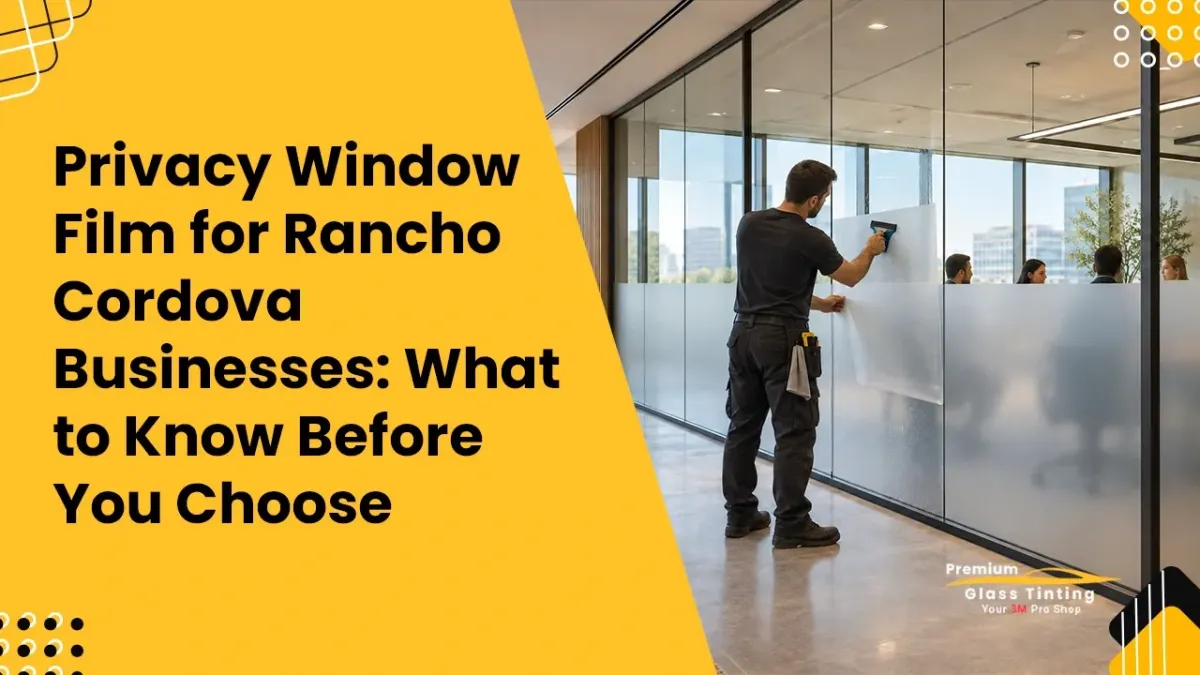
Privacy Window Film for Rancho Cordova Businesses: What to Know Before You Choose
Large windows can make a business feel open and welcoming. They bring light into the workspace, showcase a storefront, and give customers a view inside. But that same visibility can become a problem when windows expose employee desks, client seating, or areas where private conversations take place.
For businesses in Rancho Cordova, privacy window film is worth considering when the existing glass leaves parts of the workplace too exposed. Choosing the right treatment starts with a few practical questions: What should people outside be able to see? How much daylight do you want to retain? And when does privacy matter most?
This guide explains what to consider before requesting a commercial window tinting quote, so you can make a decision that suits your space and daily operations.
Where Does Your Business Need More Privacy?
Before choosing a film, identify the windows causing the problem. A storefront, a private office, and a customer waiting area may each need a different approach.
Walk around your property and look inside from the places people normally pass or stop. Check the view from the sidewalk, parking spaces, entrance, and neighboring businesses.
Pay particular attention to:
Desks positioned close to exterior windows.
Computer screens visible from public areas.
Seating where customers may feel exposed.
Meeting areas facing a walkway or parking lot.
Storage or administrative areas visible through the storefront.
Be specific about what you want to change. “We want customers seated by this window to feel less exposed” is more useful than simply asking for the darkest tint available.
It also helps to distinguish between an occasional inconvenience and an everyday problem. A window beside a rarely used desk may be a lower priority than glass facing a busy consultation area.
What Privacy Window Film Can and Cannot Do
Privacy window film is intended to reduce or obscure visibility through glass. The result depends on the selected film, the lighting, and how the space is arranged.
Some treatments change how clearly someone can see through the glass. Reflective treatments rely on differences in brightness between the two sides. These approaches can produce very different results, even when both are described as privacy film.
That is why the word “privacy” alone is not enough to choose a product. Explain whether you want to reduce casual views into the building, obscure a particular area, or retain a clear view outside.
Also, keep expectations practical. Window film does not provide sound privacy, and reducing visibility through glass is not the same as securing the building against entry. If your concern involves confidential conversations, visible documents, or computer screens, room layout and workplace practices still matter.
Will Privacy Film Work After Dark?
This is one of the most important questions to ask before installation.
Reflective film can provide privacy when the outside is brighter than the interior. Once it becomes dark outside and the lights are on inside, that balance changes. You should not assume a window that feels private during the afternoon will provide the same privacy in the evening.
Consider your actual operating hours:
Do employees stay after sunset?
Do customers attend evening appointments?
Are office lights left on after closing?
Does cleaning take place while the interior is brightly lit?
Mention these details during the consultation. If nighttime privacy is essential, ask which available treatment can meet that need and whether a separate covering may also be necessary.
The goal is to assess privacy under the conditions in which you will use the room—not only when the windows are viewed in daylight.
Balancing Privacy With Natural Light
A business can need more privacy without wanting a darker interior.
Before making a selection, decide how important daylight is in each area. Reception seating, employee workstations, and product displays may all benefit from the light coming through the glass.
Ask to review any available samples in the actual space. Look at the proposed treatment from both sides, with the interior lights switched on. Consider how it affects the room as well as the building’s appearance.
Useful questions include:
Will the room still feel comfortably bright?
How much of the outside view will remain?
Will customers be able to see the entrance clearly?
Does the treatment suit the appearance of neighboring windows?
Does it address the specific view we want to block?
The darkest-looking option is not automatically the best match. A successful choice provides the privacy you need while preserving the parts of the space that already work well.
Different Considerations for Offices and Storefronts
Office Windows
In an office, privacy concerns often center on desks, meetings, and employees working close to glass.
Begin by checking the position of furniture and screens. Moving a monitor or adjusting a seating arrangement may reduce an exposed view. Window film can then be discussed as part of a broader plan for the room.
Think about seated and standing sightlines. A treatment that conceals a desk from one angle may leave it visible from another. Explain these concerns during the project assessment rather than relying on a small sample alone.
Storefront Windows
For a storefront, visibility can be valuable. Customers may want to see merchandise, understand the layout, or recognize that the business is open before walking in.
Identify which views you want to preserve and which you want to reduce. A customer-facing display may have different needs from an administrative area behind it.
Review the appearance from outside as well as inside. The chosen treatment should support the way customers approach and recognize your business.
Premium Glass & Tint provides commercial tinting for storefronts, offices, and new-construction projects in the Rancho Cordova and Sacramento area. A project evaluation gives you an opportunity to explain these priorities and discuss suitable available options.
Mention Heat and Glare During the Consultation
Privacy may be the main reason you are considering window film, but it might not be the only issue with the glass.
Perhaps employees lower blinds every afternoon because sunlight falls across their screens. Customers may avoid seats beside a bright window. One part of the office may feel less comfortable than the rest.
Mention those concerns at the start. Privacy, glare reduction, and heat control are separate requirements, and the selected film needs to be evaluated against each one.
Ask what the proposed product is designed to do. Avoid assuming that a film provides strong heat control simply because it looks dark, or that every privacy treatment offers the same performance.
If energy savings are part of your decision, ask for realistic expectations for your building. The result will depend on the windows, exposure, shading, selected film, and how the premises are used. A general savings promise is less useful than advice based on your property.
What Affects a Commercial Window Film Quote?
A useful estimate should identify the proposed film and explain the scope of the installation.
Before comparing prices, check whether each quote covers the same work. Points to discuss include:
The number and size of the windows.
The selected product and proposed coverage.
The condition of the existing glass.
Whether old film or adhesive needs removal.
Access around desks, displays, or other obstacles.
Any difficult-to-reach glass.
Installation scheduling and cleanup.
Applicable warranty coverage.
Avoid choosing on price alone when the proposals involve different products or preparation work. Ask for clarification wherever the scope is unclear.
You can make the initial conversation more productive by providing photographs, approximate window dimensions, and a short explanation of your privacy concerns. These details help describe the project, although the glass and installation requirements still need to be assessed.
Preparing Your Business for Installation
Once you have selected an appropriate option, discuss how the work will fit around daily operations.
Ask which areas need to be accessible and whether furniture or displays should be moved beforehand. Explain any busy customer periods, scheduled meetings, or access restrictions that could affect the work.
If you lease the premises, check whether the property manager needs to approve changes to the windows. Raising that question early can help avoid delays after a product has been selected.
Before installation begins, confirm:
Which windows are included.
What product will be installed.
What the finished coverage will look like.
How access to the work area will be managed.
What schedule is expected.
Which aftercare and warranty documents you will receive.
These details give everyone a clear understanding of the project before work starts.
Ask About Warranty Coverage and Aftercare
Before installation, ask which warranty applies to your selected film and what it covers. Coverage can vary by product and application, so request the details in writing.
Follow the care instructions provided for your installed film. Confirm when you can first clean the glass, which cleaning products are suitable, and which tools to avoid. Share these instructions with your cleaning team.
Keep the product information, invoice, and warranty details together so they are easy to find if you have questions later.
Frequently Asked Questions
Can people still see through privacy window film?
That depends on the film and the viewing conditions. Some treatments reduce visibility, while others obscure the view more substantially. Discuss how much privacy you need and assess the proposed option from both sides of the glass.
Can we keep our view outside?
Some options can preserve an outward view under suitable lighting conditions. Treatments that obscure the glass also affect your ability to see through it. Tell the installer whether keeping that view is a priority.
Do all our business windows need the same treatment?
Not necessarily. Different areas may have different requirements. Discuss whether a coordinated approach can address private work areas while preserving useful visibility elsewhere.
Does privacy film replace blinds?
It may reduce the need to close blinds for certain purposes, depending on the selected film. However, blinds or another covering may still be useful when adjustable light control or nighttime privacy is needed.
Will window film protect information on our screens?
Do not assume that film alone will conceal sensitive information. Review screen placement, viewing angles, lighting, and any untreated glass. Check the actual result before relying on it for visual privacy.
How do I choose the right film for my business?
Start with the problem you want to solve, your operating hours, and the amount of daylight and outward visibility you want to retain. Then request an assessment of the glass and discuss the products available for your application.
Talk to Premium Glass & Tint About Your Commercial Windows
Choosing privacy window film for a Rancho Cordova business should begin with a close look at the space. The right discussion covers who can see inside, when privacy matters, and how the windows contribute to the working environment.
Premium Glass & Tint’s commercial team can listen to your concerns, evaluate the project area, and provide a quote. Whether you are planning an office update, reviewing a storefront, or working on new construction, explain what you need the glass to do before selecting a treatment.
Call or text (916) 476-5105, or contact Premium Glass & Tint to discuss your project and the commercial tinting options available.